Items filtered by date: September 2025
Treatment Options for Broken Toes
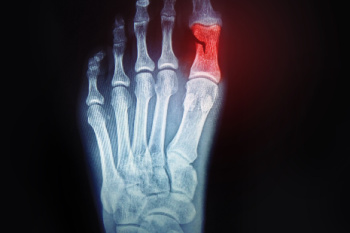
Broken toes can cause significant discomfort and limit mobility. Toe fractures usually occur from stubbing the toe, dropping something heavy on the foot, or sustaining a sports-related impact. Symptoms include swelling, bruising, and pain when walking or applying pressure. Diagnosis is confirmed through an exam and imaging to assess the extent of the fracture and determine if the bone is displaced. Stable, nondisplaced fractures may be managed with protective footwear to reduce movement and pressure, while displaced fractures often require a procedure to realign the bone. Fractures of the big toe tend to be more serious due to this toe’s role in balance and walking. Big toe injuries may require stabilization or even surgery if the damage is severe. A podiatrist can provide a proper diagnosis, realignment, and supportive devices to promote healing and prevent long-term complications. If you are experiencing pain from a broken toe, it is suggested that you make an appointment with a podiatrist for an exam, diagnosis, and treatment.
A broken toe can be very painful and lead to complications if not properly fixed. If you have any concerns about your feet, contact Gerard Skaziak, DPM from Lakeview Family Foot Care. Our doctor will treat your foot and ankle needs.
What to Know About a Broken Toe
Although most people try to avoid foot trauma such as banging, stubbing, or dropping heavy objects on their feet, the unfortunate fact is that it is a common occurrence. Given the fact that toes are positioned in front of the feet, they typically sustain the brunt of such trauma. When trauma occurs to a toe, the result can be a painful break (fracture).
Symptoms of a Broken Toe
- Throbbing pain
- Swelling
- Bruising on the skin and toenail
- The inability to move the toe
- Toe appears crooked or disfigured
- Tingling or numbness in the toe
Generally, it is best to stay off of the injured toe with the affected foot elevated.
Severe toe fractures may be treated with a splint, cast, and in some cases, minor surgery. Due to its position and the pressure it endures with daily activity, future complications can occur if the big toe is not properly treated.
If you have any questions, please feel free to contact our offices located in Guntersville and Albertville, AL . We offer the newest diagnostic and treatment technologies for all your foot care needs.
Ease Painful Feet With Orthotics

Custom orthotics can be used to relieve foot pain and discomfort. They're also used to treat various foot conditions and deformities. Flat feet, bunions, and Morton's neuroma are just a few of the foot conditions that have been known to benefit from the use of orthotics.
Comfy feet are happy feet! Contact us today.
Symptoms of a Sprained Ankle
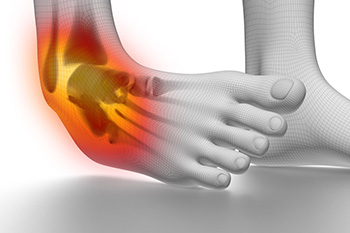
A sprained ankle occurs when the ligaments that support the joint are stretched or torn, often after rolling or twisting the foot. This injury is common during sports, running on uneven ground, or even simple daily activities like stepping off a curb. Symptoms usually begin with sudden pain around the ankle, which may be followed by swelling, bruising, and in more severe cases, difficulty placing weight on the foot. Instability can also develop, making it feel like the ankle might give way when standing or walking. Most ankle sprains affect the outer side of the ankle, though the inner side or the area just above the joint can be involved as well. A podiatrist can examine the ankle, order imaging if needed, and recommend the right treatment plan to restore stability and function. If you have symptoms of a sprained ankle, it is suggested that you make an appointment with a podiatrist for an exam, diagnosis, and treatment, which may include immobilization.
Although ankle sprains are common, they aren’t always minor injuries. If you need your ankle injury looked at, contact Gerard Skaziak, DPM from Lakeview Family Foot Care. Our doctor can provide the care you need to keep you pain-free and on your feet.
How Does an Ankle Sprain Occur?
Ankle sprains are the result of a tear in the ligaments within the ankle. These injuries may happen when you make a rapid shifting movement while your foot is planted. A less common way to sprain your ankle is when your ankle rolls inward while your foot turns outward.
What Are the Symptoms?
- Pain at the sight of the tear
- Bruising/Swelling
- Ankle area is tender to touch
- In severe cases, may hear/feel something tear
- Skin discoloration
Preventing a Sprain
- Wearing appropriate shoes for the occasion
- Stretching before exercises and sports
- Knowing your limits
Treatment of a Sprain
In many cases, the RICE method (Rest, Ice, Compression, and Elevate) is used to treat ankle sprains. However, you should see a podiatrist to see which treatment option would work best with your injury. In severe cases, surgery may be required.
It is important to ask your doctor about rehab options after you receive treatment for your injury. Stretching, strength training, and balance exercises may help the ankle heal while also preventing further injury.
If you have any questions, please feel free to contact our offices located in Guntersville and Albertville, AL . We offer the newest diagnostic and treatment technologies for all your foot care needs.
Treatment Options for Clubfoot
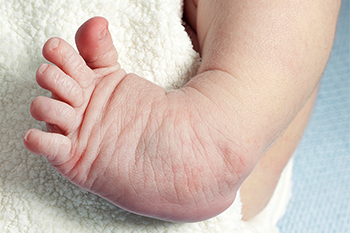
Clubfoot is a congenital condition that causes a baby’s foot to turn inward or downward, affecting one or both feet. The heel and calf on the affected side are often smaller, and, in severe cases, the foot may appear twisted and almost upside down. Although clubfoot is not painful for babies, it prevents normal walking, if left untreated. Genetics appears to play a role in this condition, as risk increases when there is a family history. Other contributing factors include smoking during pregnancy or reduced amniotic fluid in the womb. A podiatrist can diagnose clubfoot soon after birth, and, in some cases, it may even be detected on prenatal imaging. Treatment often begins within weeks of delivery. It may involve gentle stretching with casting and a gradual repositioning of the foot. Surgery is considered when the deformity is severe. If your baby has a clubfoot deformity, it is suggested that you promptly schedule an appointment with a podiatrist, including this type of doctor on your healthcare team.
Congenital foot problems require immediate attention to avoid future complications. If you have any concerns, contact Gerard Skaziak, DPM of Lakeview Family Foot Care. Our doctor can provide the care you need to keep you pain-free and on your feet.
Congenital foot problems are deformities affecting the feet, toes, and/or ankles that children are born with. Some of these conditions have a genetic cause while others just happen. Some specific foot ailments that children may be born with include clubfeet, polydactyly/macrodactyly, and cleft foot. There are several other foot anomalies that can occur congenitally. What all of these conditions have in common is that a child may experience difficulty walking or performing everyday activities, as well as trouble finding footwear that fits their foot deformity. Some of these conditions are more serious than others. Consulting with a podiatrist as early as possible will help in properly diagnosing a child’s foot condition while getting the necessary treatment underway.
What are Causes of Congenital Foot Problem?
A congenital foot problem is one that happens to a child at birth. These conditions can be caused by a genetic predisposition, developmental or positional abnormalities during gestation, or with no known cause.
What are Symptoms of Congenital Foot Problems?
Symptoms vary by the congenital condition. Symptoms may consist of the following:
- Clubfoot, where tendons are shortened, bones are shaped differently, and the Achilles tendon is tight, causing the foot to point in and down. It is also possible for the soles of the feet to face each other.
- Polydactyly, which usually consists of a nubbin or small lump of tissue without a bone, a toe that is partially formed but has no joints, or an extra toe.
- Vertical talus, where the talus bone forms in the wrong position causing other bones in the foot to line up improperly, the front of the foot to point up, and the bottom of the foot to stiffen, with no arch, and to curve out.
- Tarsal coalition, when there is an abnormal connection of two or more bones in the foot leading to severe, rigid flatfoot.
- Cleft foot, where there are missing toes, a V-shaped cleft, and other anatomical differences.
- Macrodactyly, when the toes are abnormally large due to overgrowth of the underlying bone or soft tissue.
Treatment and Prevention
While there is nothing one can do to prevent congenital foot problems, raising awareness and receiving neonatal screenings are important. Early detection by taking your child to a podiatrist leads to the best outcome possible.
If you have any questions, please feel free to contact our offices located in Guntersville and Albertville, AL . We offer the newest diagnostic and treatment technologies for all your foot care needs.
Diabetic Foot and Ankle Wounds
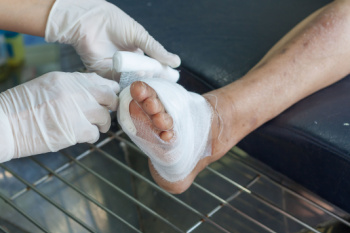
Living with diabetes requires careful attention to the health of the feet and ankles. Small cuts or blisters can progress into more serious wounds because circulation may be reduced and sensation often diminished. One type of wound seen in diabetic patients is a neuropathic ulcer, which develops when pressure and friction go unnoticed due to nerve damage. Ischemic ulcers may also appear when poor blood flow prevents proper healing. Infections are another concern, beginning as minor sores and quickly advancing without timely care. Even something as simple as a shoe rubbing against the skin can create an opening that lingers. Recognizing changes early is essential, yet many patients overlook small issues until they worsen. Professional evaluation offers the best chance for recovery. If you notice any wounds on your feet or ankles it is suggested that you promptly consult a podiatrist who can effectively treat foot wounds.
Wound care is an important part in dealing with diabetes. If you have diabetes and a foot wound or would like more information about wound care for diabetics, consult with Gerard Skaziak, DPM from Lakeview Family Foot Care. Our doctor will assess your condition and provide you with quality foot and ankle treatment.
What Is Wound Care?
Wound care is the practice of taking proper care of a wound. This can range from the smallest to the largest of wounds. While everyone can benefit from proper wound care, it is much more important for diabetics. Diabetics often suffer from poor blood circulation which causes wounds to heal much slower than they would in a non-diabetic.
What Is the Importance of Wound Care?
While it may not seem apparent with small ulcers on the foot, for diabetics, any size ulcer can become infected. Diabetics often also suffer from neuropathy, or nerve loss. This means they might not even feel when they have an ulcer on their foot. If the wound becomes severely infected, amputation may be necessary. Therefore, it is of the upmost importance to properly care for any and all foot wounds.
How to Care for Wounds
The best way to care for foot wounds is to prevent them. For diabetics, this means daily inspections of the feet for any signs of abnormalities or ulcers. It is also recommended to see a podiatrist several times a year for a foot inspection. If you do have an ulcer, run the wound under water to clear dirt from the wound; then apply antibiotic ointment to the wound and cover with a bandage. Bandages should be changed daily and keeping pressure off the wound is smart. It is advised to see a podiatrist, who can keep an eye on it.
If you have any questions please contact our offices located in Guntersville and Albertville, AL . We offer the newest diagnostic and treatment technologies for all your foot and ankle needs.
Treat Heel Pain with Dr. Skaziak
Click below for audio information.
Suffering from heel pain? You may have plantar fasciitis. Request an appointment with Lakeview Family Foot Care, and get back on your feet and back to doing what you love.
Guntersville Office
Guntersville, AL 35976
Albertville Office
Albertville, AL 35950
Sesamoiditis and the Role of a Podiatrist
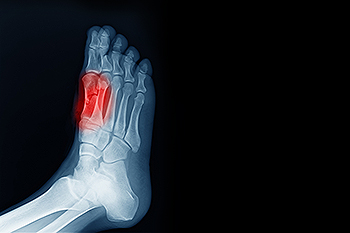
Sesamoiditis is a painful condition that affects the small sesamoid bones located beneath the big toe joint. These bones help with movement and weight bearing, but can become inflamed from repetitive stress or injury. Common causes include activities that place pressure on the forefoot, such as running, dancing, or wearing high-heeled shoes. Risk factors include foot structure abnormalities, overuse, and improper footwear. Symptoms include pain under the big toe, swelling, and difficulty pushing off while walking. A podiatrist can diagnose sesamoiditis, provide customized treatment options, such as padding, orthotics, and activity modifications, and offer long-term solutions for relief. If you are experiencing forefoot pain, it is suggested that you consult a podiatrist who can accurately diagnose and treat the problem.
Sesamoiditis is an unpleasant foot condition characterized by pain in the balls of the feet. If you think you’re struggling with sesamoiditis, contact Gerard Skaziak, DPM of Lakeview Family Foot Care. Our doctor will treat your condition thoroughly and effectively.
Sesamoiditis
Sesamoiditis is a condition of the foot that affects the ball of the foot. It is more common in younger people than it is in older people. It can also occur with people who have begun a new exercise program, since their bodies are adjusting to the new physical regimen. Pain may also be caused by the inflammation of tendons surrounding the bones. It is important to seek treatment in its early stages because if you ignore the pain, this condition can lead to more serious problems such as severe irritation and bone fractures.
Causes of Sesamoiditis
- Sudden increase in activity
- Increase in physically strenuous movement without a proper warm up or build up
- Foot structure: those who have smaller, bonier feet or those with a high arch may be more susceptible
Treatment for sesamoiditis is non-invasive and simple. Doctors may recommend a strict rest period where the patient forgoes most physical activity. This will help give the patient time to heal their feet through limited activity. For serious cases, it is best to speak with your doctor to determine a treatment option that will help your specific needs.
If you have any questions, please feel free to contact our offices located in Guntersville and Albertville, AL . We offer the newest diagnostic and treatment technologies for all your foot care needs.
